Tuesday, February 22, 2011

1845 German Day Dress

The silhouette of the 1840s is fabulous.  I love the look of wide shoulders to emphasize the small waist (or create the illusion of a small waist).
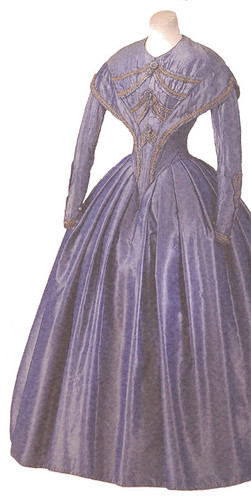
1840s Silk Dress, source unknown.
Jenny Lind. Source: Library of Congress
So I instantly went ga-ga over the Truly Victorian TV454 1845 German Day Dress pattern when it came out in 2007.  I made the gathered front version with a sheer cotton plaid in the Summer of 2007 and made the bretelle version in Fall 2010.  Truly Victorian patterns are sized in such a way that you can easily adapt them to your specific measurements.  Mine mostly corresponded with Size C, but I did make the sleeve pieces narrower.
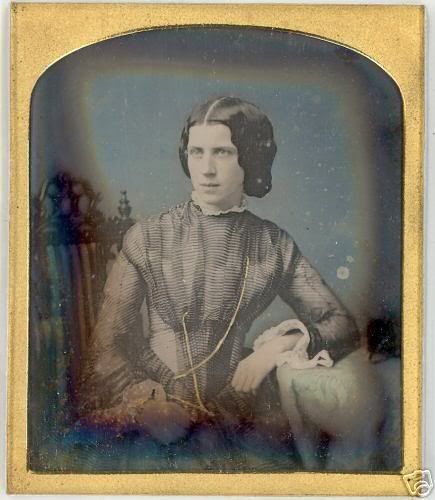
I was inspired this daguerreotype to play with the stripes of the fabric:
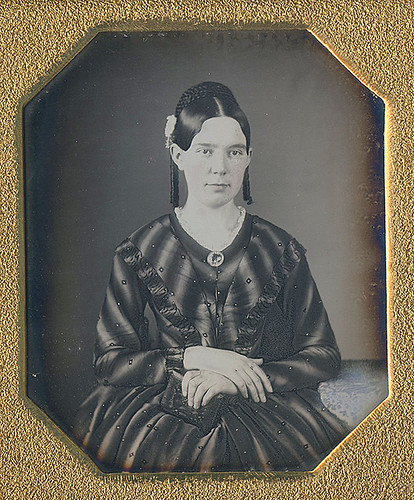
Source: finedags.com
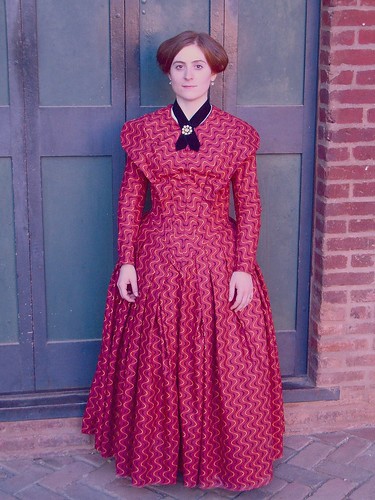
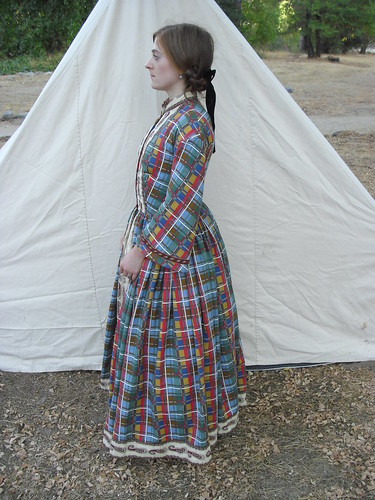
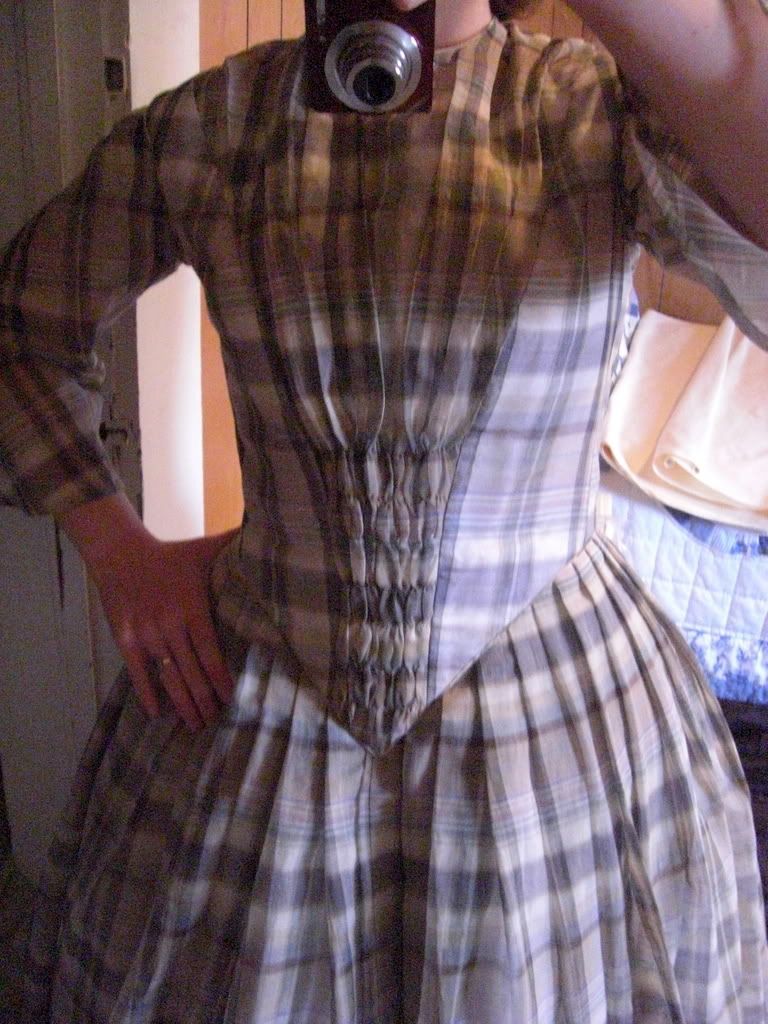
My version of the 1845 German Day Dress
at Columbia State Historic Park Diggins Event
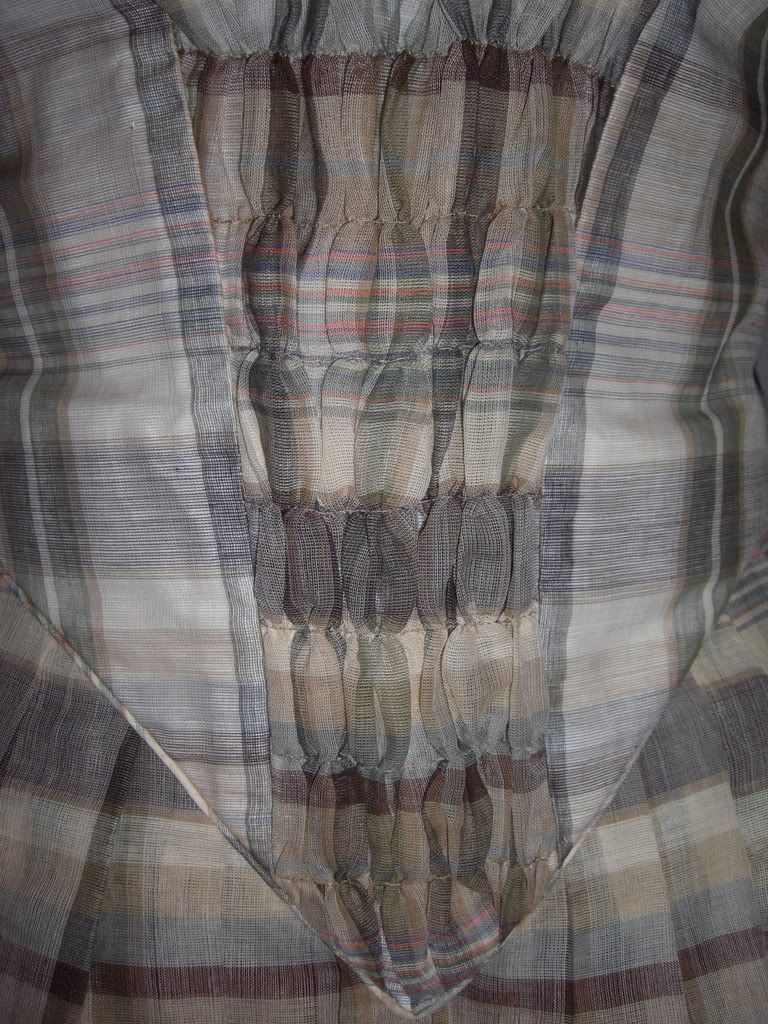
I matched the squiggles!
The front of the bodice has four pieces, so I piped the center seam to add a little contrast.  I lost 10 pounds from the point of cutting out the fashion fabric, so it doesn't fit like I had planned.  The bretelles also need some sort of interfacing to keep their shape since they kept folding in at my underarm.  I have plans to take this dress apart to fit my smaller frame fix the bretelles.  Onwards and upwards!

Monday, February 14, 2011

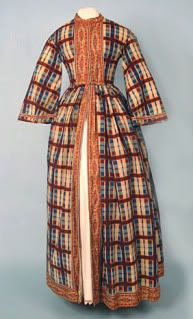
1840s Wrapper

I've always wanted a wrapper to round out my wardrobe and fell in love with this original that was sold through the Charles A.Whitaker Auction house a few years ago:

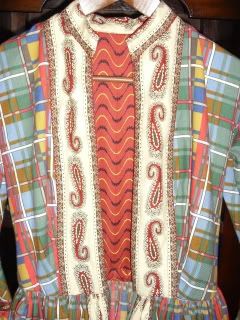
Low and behold I found some wool and cotton challis at fabric.com that fit the bill almost exactly!  For the trim and collar I used strips of paisley from a reproduction cotton print that I purchased at Sac City Drygoods and I used leftovers from another 1840s dress I made to line the bodice.

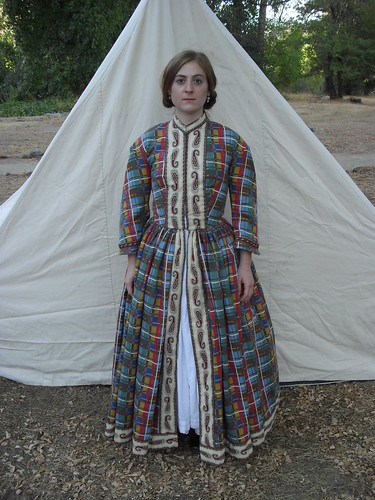
The finished product:
I used a different stripe from the fabric for the cuff trim.
I can wear the wrapper with or without a corset (the pictures are taken without).  So far this has been one of my favorite projects, in terms of matching the original.  It took about two years to collect all the materials, but it was worth the wait! Now I just need a little cap to wear to complete my morning attire.

Thursday, February 10, 2011

1844 German Mantle

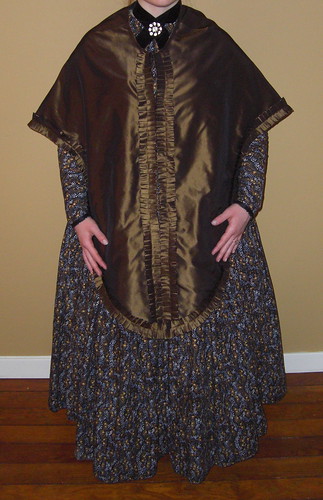
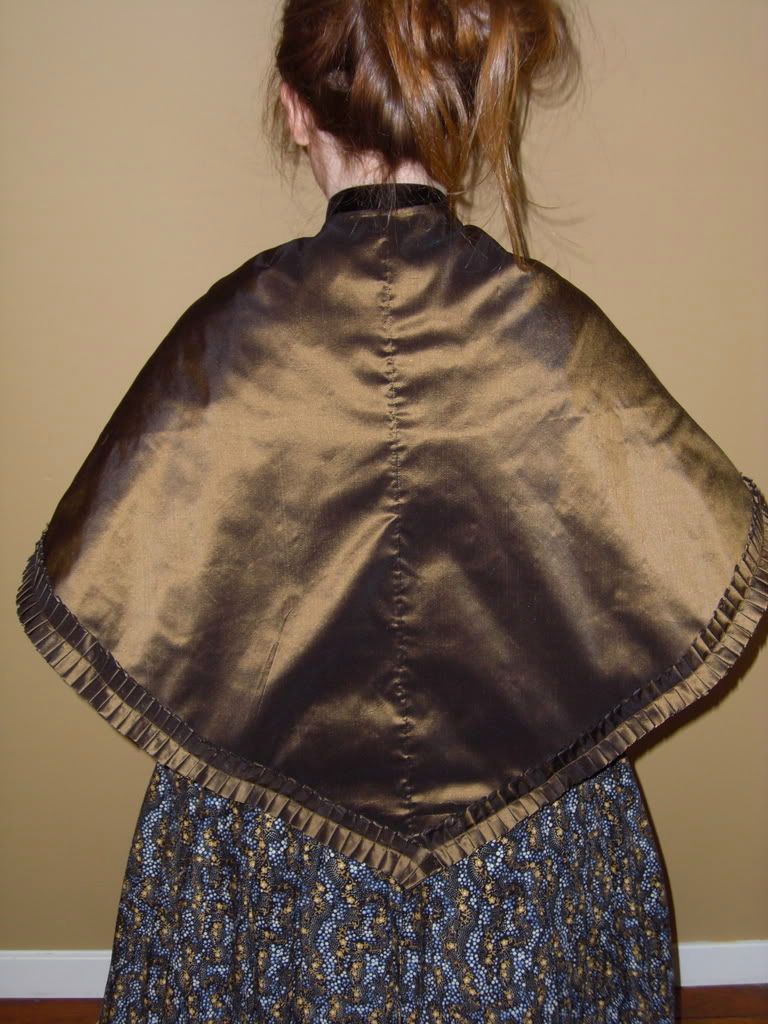
I used the left over silk from my 1840s silk dress project to make an 1844 German Mantle from The Cut of Womens Clothes:1600-1930 by Norah WaughThe pattern shapes are odd, but it was pretty easy to put together and I hand flat felled all the seams, as it is unlined.   It is simply trimmed with self-fabric ruching around the edge.  The neck is too large so I put in two darts at the back of the neck to make it smaller after these pictures were taken.
Front
Back


Wednesday, February 2, 2011

1840s Silk Dress

I had a stash of brown iridescent silk taffeta that I picked up in the LA Fabric District years ago that I wanted to make a nice dress that could be worn to a number of occasions without feeling overdressed.  I found this image online:
From Old Sacramento Museum Collection
 And this original:
Original 1840s Satin Dress

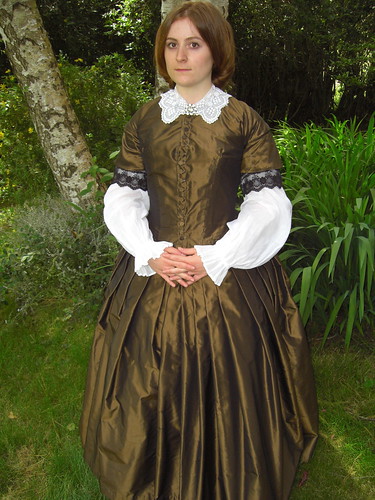
I altered the 1840s Round Dress from Laughing Moon Patterns to make a dinner/reception dress that I based off of these two images.  I liked the buttons on the silk dress and I made sheer undersleeves like those in the dag.  The bodice is boned in the front and has wood-disc core fabric covered buttons.  The undersleeves are more sheer in real life than the picture.  Sadly, this dress is now enormous on me after I've lost 25 pounds since I made it in 2007.  I guess it's a good excuse to make another silk dress!
At the Dickens Fair

Full length view of my 1840s Silk Dress

Tuesday, January 25, 2011

1838 Knitted Garters


 I followed the directions in The Workwoman's Guide (1838):

Figure 23, upper right corner
Ta da!
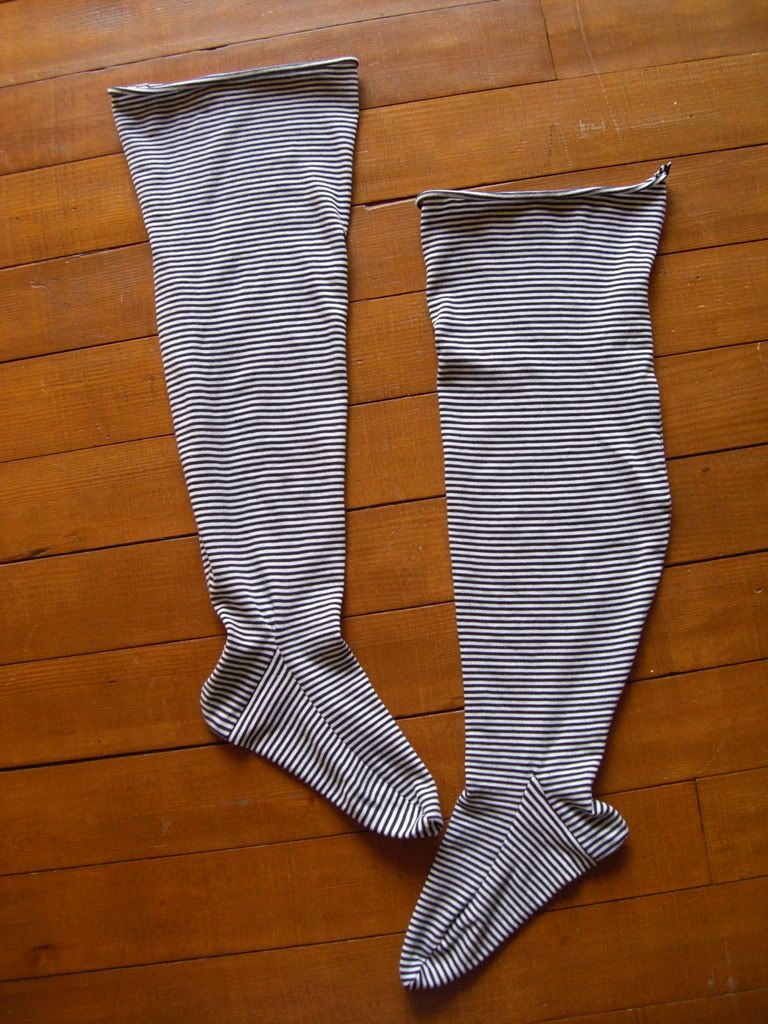
I made them out of Lamb's Pride wool, though looking back I should have used something finer, but they get the job done.  I thought orange would be a fun color to go with my navy and white striped stockings made from the Kannik's Korner Pattern KK-6001.

Finer stripped stockings were more common than the thick striped stockings most Civil War vendors sell.  I bought this 100% cotton knit from eBay.

Saturday, January 22, 2011

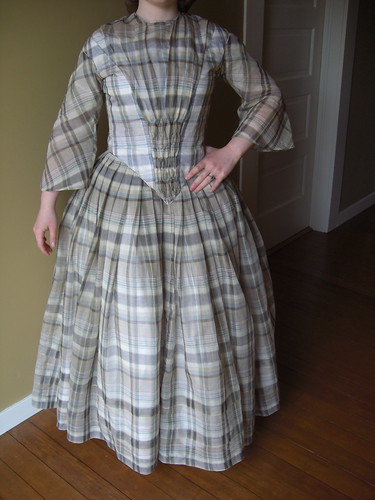
1840s Sheer Dress

In the depths of winter people either start one of two projects: a wool garment or a summer dress.  The first tries to address the issue of cold of events here and now, while the other vainly tries to usher in spring just a little earlier than it can ever possibly begin.  I am definitely in the later category.  

Before my wedding in Summer 2008 I wanted to work on another mid-19th century dress to get into the groove of things and not mess up horribly on my Duchess silk satin.  I saw the image  below and fell in love with it. Sheers were all the rage on The Sewing Academy forum, though I'm not one for jumping on the ol' bandwagon, but who doesn't love a new summer dress?!

English daguerreotype from eBay, note the half lining
I used the Truly Victorian 454 pattern but drafted my own modified-bell sleeves.  The bodice is lined with white polished cotton and cotton lacing at the top edge of the half-lining around my shoulders and just covers my chemise underneath.  I picked up the sheer cotton plaid at my local Jo-Anns on clearance for $1.50 a yard.  In total I think the whole dress cost less than $10 to make.

Note the longer waistline than 1860s fashions
Detail view of gathered fan front, the lining is boned

You can see the half-lining better in this photo

When I wear this dress I have accessorize it with a pair of sheer cotton undersleeves, a ladies pink silk cravat, paste brooch, seed-pearl Georgian style earrings and a white silk bonnet.  I feel like Easter on parade but it is lovely to wear in the heat of the summer!

Friday, January 21, 2011

1840s Corded Petticoat


Before the crinoline came into fashion in 1856, multiple petticoats were used to achieve the bell shape under women's skirts.  Here's an original from the Corsets and Crinoline website that was part of my inspiration:

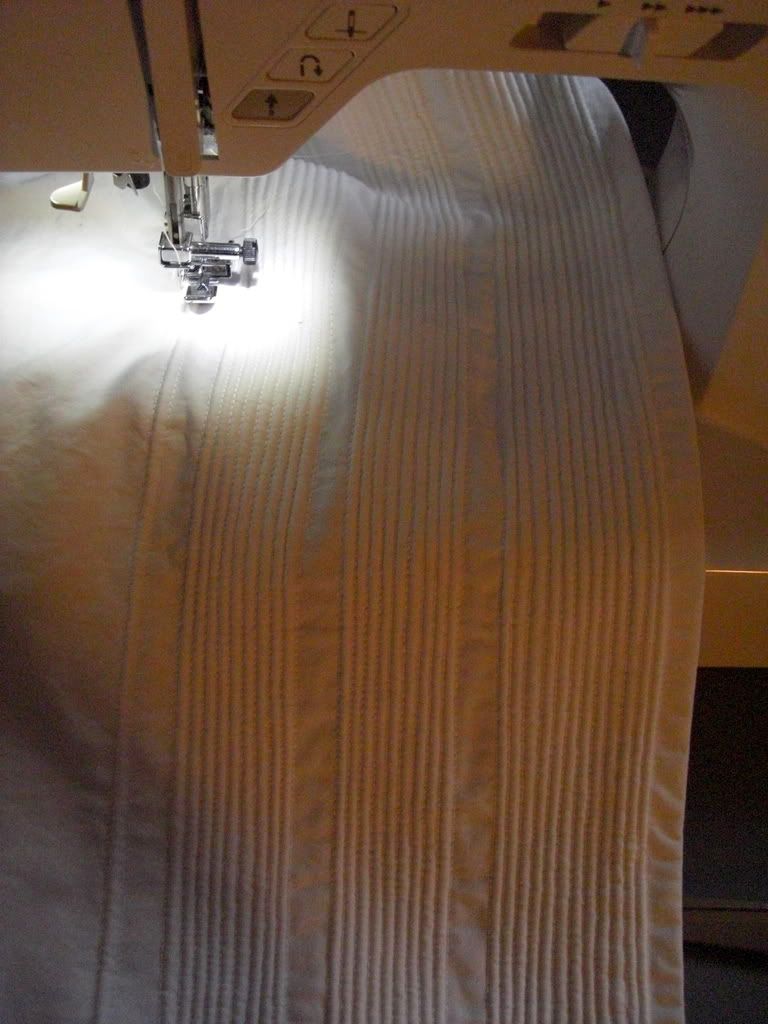
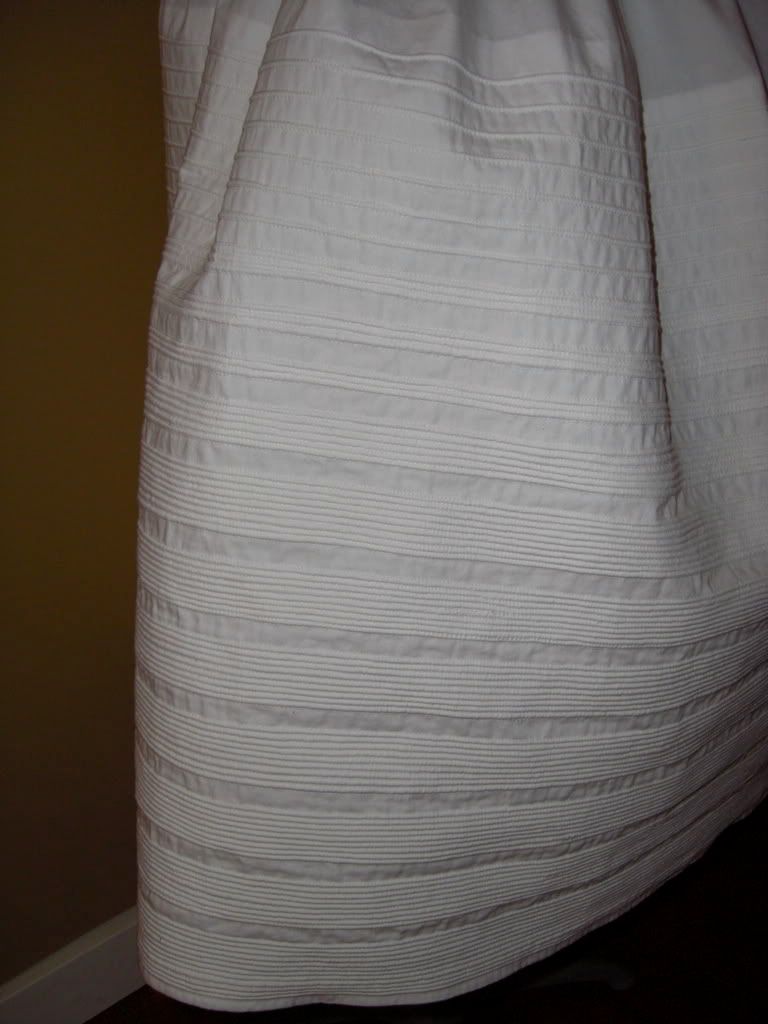
The base layer I use is a corded petticoat made from plain weave cotton and Sugar and Cream cotton yarn.  There are 90 rows total. 
 
Sewing in cords
Here's a useful step by step guide from Elizabeth Stewart Clark's revamped website:

Yes, this took awhile even on the machine!
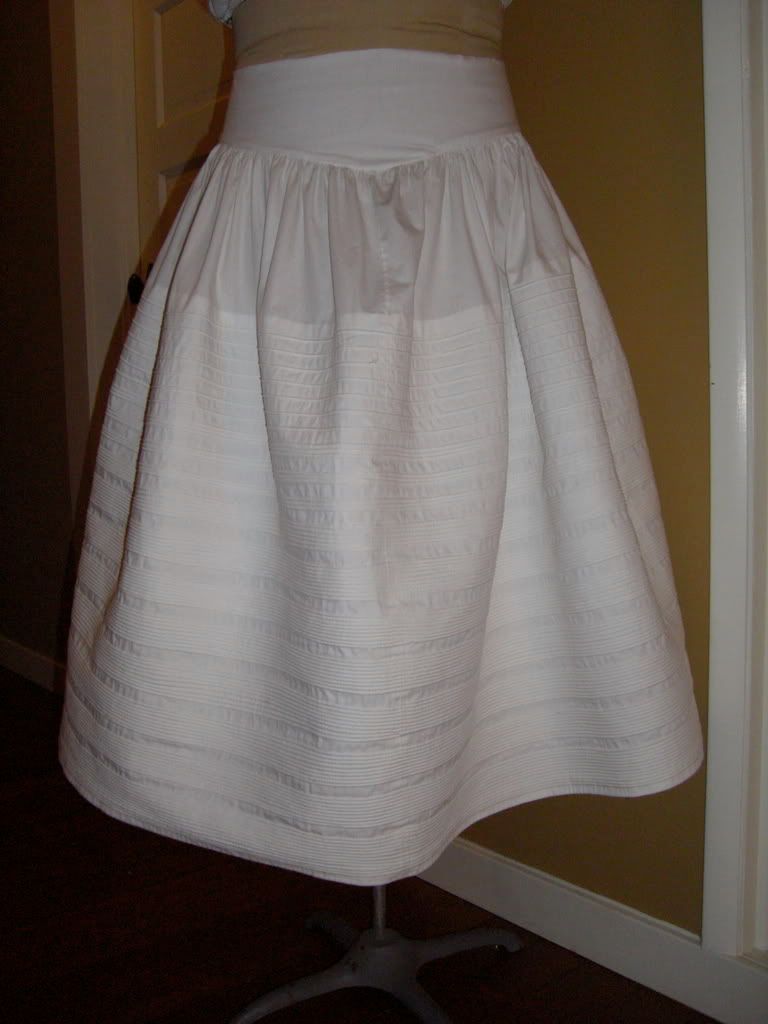
Finished!

The 1840s waistline is longer than the natural waistline, so to reduce bulk at the waist I made a yoked waistband for the petticoat.