Monday, June 13, 2011

1840s Pleated Bertha

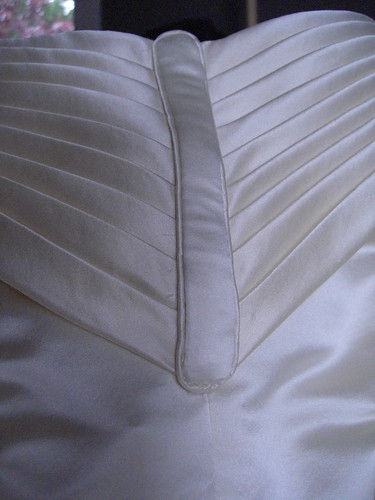
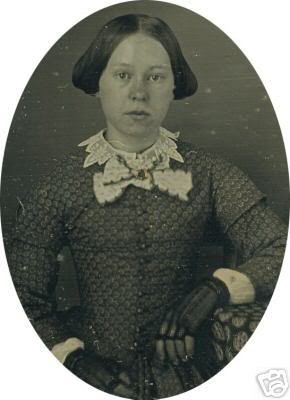
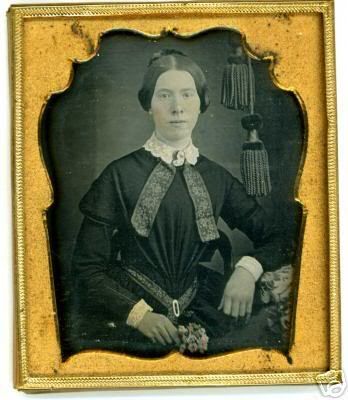
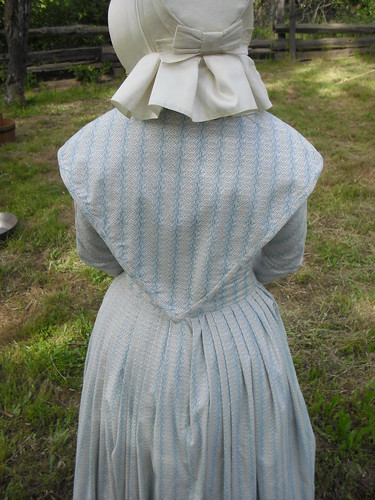
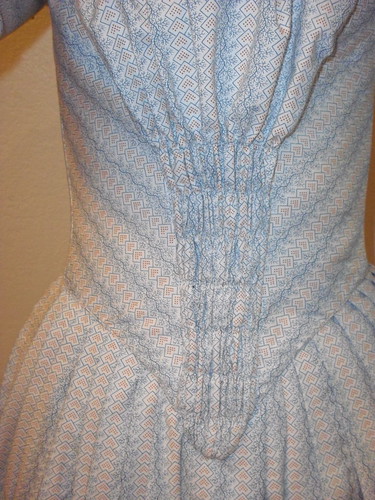
 Inspired by this dress from the Tasha Tudor collection, I made a pleated bertha out of 100% silk duchess satin with a hard backing for my wedding dress:
Detail of pleated bertha.
 To make my life easier I used the Civil War Ballgown Simplicity 5724 bertha pattern pieces.

Simplicity 5724 
I attached piped lozenges at the berth front and shoulder seams (like the original dress) and the back closed with hooks and eyes.
Bertha back, note lozenges over shoulder seam.

Thursday, June 2, 2011

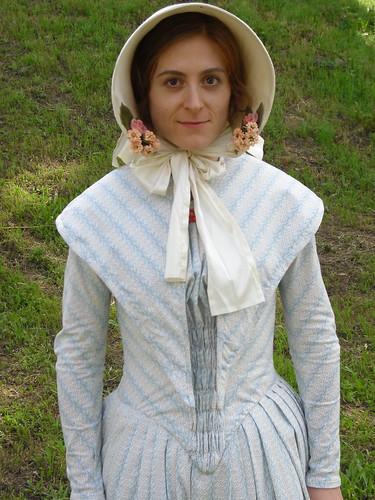
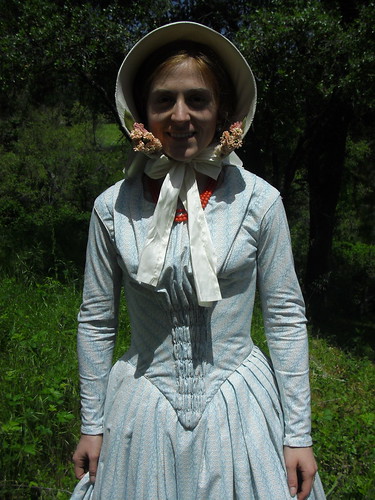
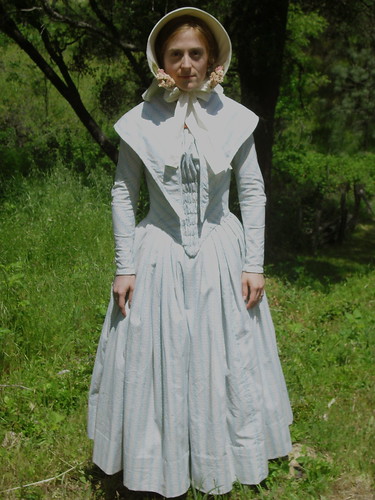
Laughing Moon #114 Ladies Round Dress 1840s-1852

Late 1840s bodices are usually either darted or fan front, with variations of course.   
Darted 1840s Dress
Fan Front 1840s Dress
Most of the dresses that I made for Gold Rush had been the fan front style using the Past Patterns dress, until Laughing Moon Mercantile published their Ladies Round Dress Pattern. A variety of styles can be achieved with the pattern with a darted or fan front bodice, sleeve variations, etc.  I made the darted version with a tighter sleeve and sleeve caps.

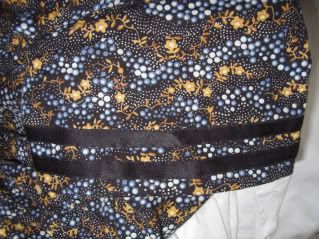
I used an 1840s reproduction cotton print with vines and bubbles, (hence the dress has been dubbed “The Bubble Dress”), 100% silk satin to cover wood discs for the buttons, and 100% silk satin ribbon trim.  The bodice lining is boned at the darts that extend up to the bust line and the dress has functional cuffs.
1840s Round Dress Pattern
Sleeve cap ribbon detail.


 Overall, I really like this pattern.  The armscyes were a bit too small for me, but other than that it went together great.  I think I will be using the bodice pattern as a base for a new 1853 dress I have in the works. .

Friday, May 20, 2011

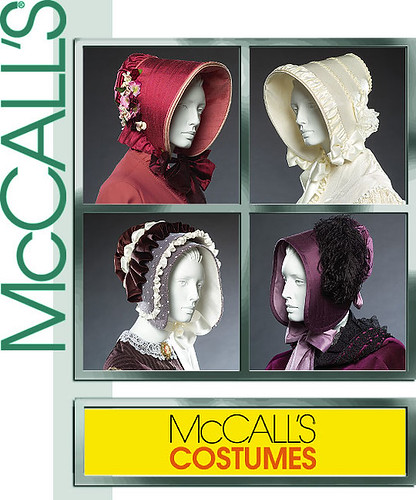
McCall's 5129 Bonnet Pattern

This was the first bonnet that I made by myself outside of millinery class.  It's McCall's 5129, which is now out of print.  I made up View A (the red bonnet), but with modifications.  I completely ignored the instructions, since it says to use a glue gun!


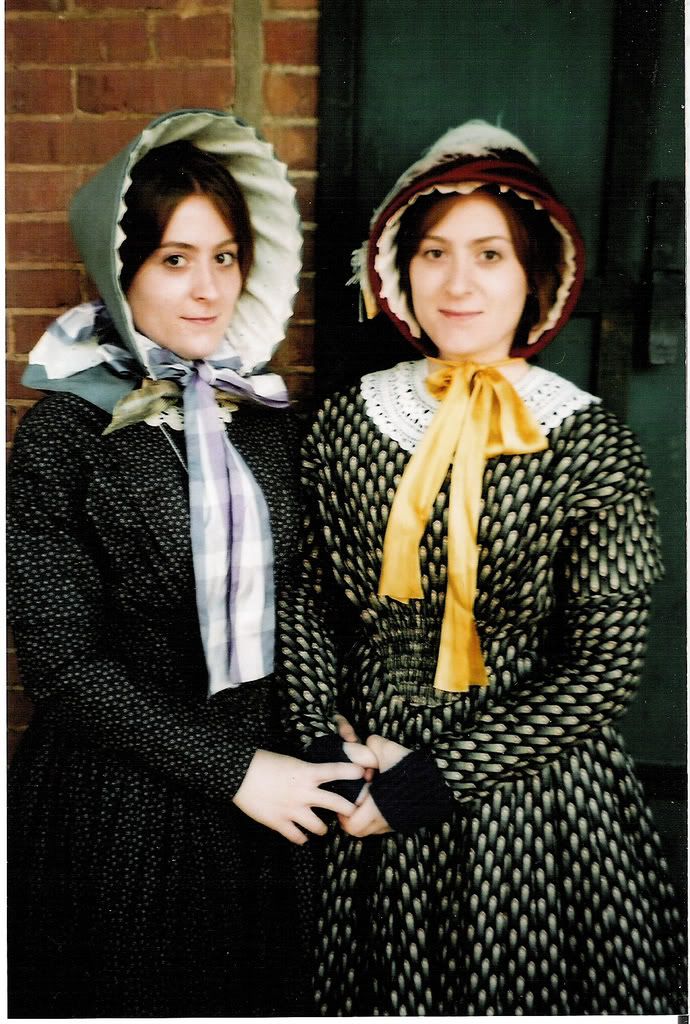
Grey bonnet on left is McCalls's 5129, bonnet on right is Miller's Millinery Round Cottage Bonnet.
I dyed some ivory taffeta to a pearl grey color for the fashion fabric and cut strips from a periwinkle, lilac, and white silk plaid that I had on hand for the ties and bavolet.  The brim is lined in cotton eyelet, which really needs to be changed out.  I cite the "poor college student" clause for its use!  I have a thin layer of batting over the top of the buckram frame to cover the seams where the wire is attached and to give a nice, smooth appearance.  Instead of a gathered crown I made mine smooth and I made my bavolet much deeper. I think for my first independent attempt, it turned out okay.  I don't wear it very often, but with a few changes and tweaks, perhaps it will come out to events again.

Sunday, May 8, 2011

1840s Fan Front

I just completed this project to attend a Gold Rush living history event this weekend where I gave a presentation on material culture and foodways of the California miner in the 1840s and 1850s.  Here's the inspiration images:
Wool Dress and Pelerine, August Auctions.


Left side dress, source: finedags.com


Pelerine front
Pelerine back
Without the pelerine
Full view

Detail view of fabric and fan front gathering
I used the Truly Victorian 454 German Day Dress Pattern with the fan front variation.  The fabric is a reproduction cotton print from Windham Fabrics that I bought at Mill Ends in Reno, Nevada.  I cut the neck wider (which was a pain and I'm not 100% satisfied with it yet) and I drafted the pelerine myself.  The pelerine edges are bound with self-fabric bias strips, like the wool dress above, and lined with white polished cotton.  I also took in the sleeves a good two inches from the TV 454 pattern and also brought up the armscyes, since I thought they dropped too much.  There are three bones at the bodice front and two the side seams.  Overall I'm fairly pleased with my new dress and received some very nice comments.  One little girl wanted to come over to "meet the princess," which I thought was a crack-up!

Tuesday, April 19, 2011

Handsewn Gold Rush Tent

I admit it.  I bought a HUGE wall tent when I started going to Civil War events.  It was even nicknamed "The Miller Mansion."  Not only was it a pain to set up with a system of bolted 2 x 4's, side wall posts, ropes, and spikes, it took up a lot of space in storage and in the car to events.  This would not do.  

Fast forward a few years and Ian and I had the idea to make our own tent for Gold Rush events, since the wall tent was just too big and not appropriate for the time period we were using it for.   Friends of ours had sewn their own, so they were also a source of inspiration for the project. We looked at original images and sketches and designed our own. 
"View of Agua Fria Valley" Source: Bancroft Library
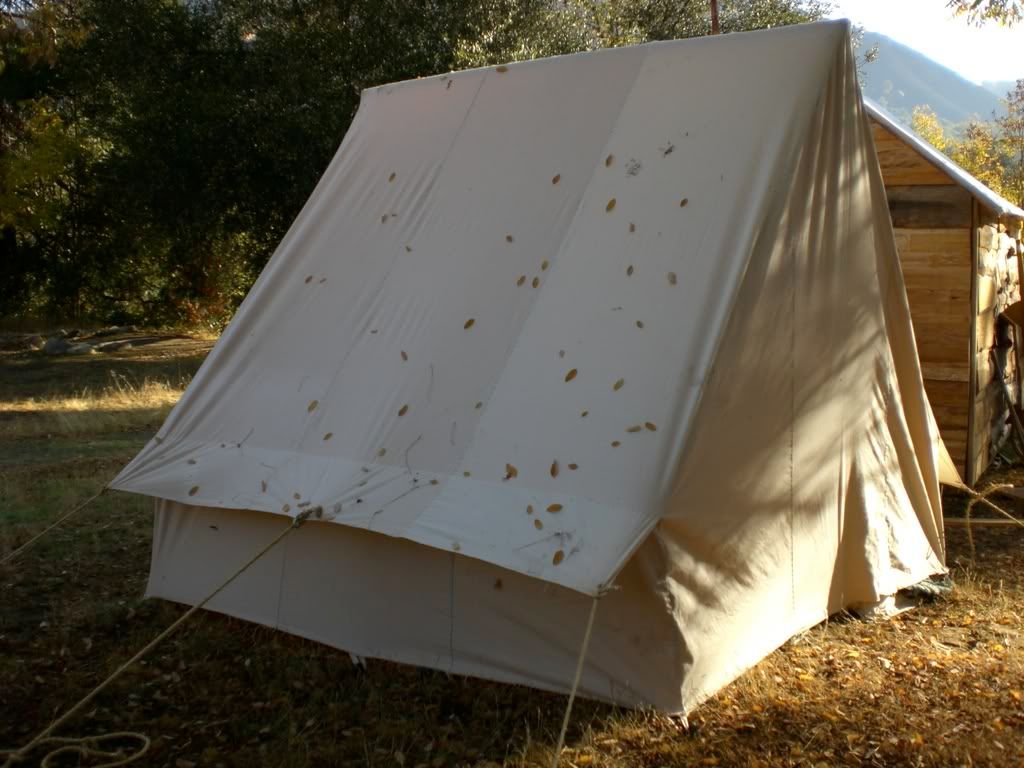
We bought canvas from the local fabric store and cut the fabric into the width that was commonly used for canvas manufacturing in the 1840s. We used twine to sew the seams with a simple running stitch.  We ended up needing more canvas than we had calculated for and ended up buying some unbleached heavy cotton to complete the final strip in the tent peak.  This actually worked perfectly since it is a thinner fabric, it almost acts as a skylight to illuminate the interior of the tent!  A friend of ours cut a ridge pole and two supports from some saplings (instead of the horrible cut lumber I had for the wall tent), which really completes the whole tent. 
Back and side view
Front view, other handsewn tents in background.


Overall, it was a fun project and something that we will get years of use out of.

Tuesday, April 12, 2011

Past Patterns Fan-Front Bodice

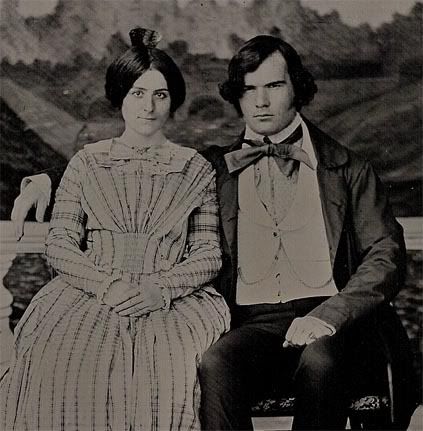
Ian and I met at Columbia State Historic Park at a Gold Rush living history event, so we decided to have our picture taken for our one-year anniversary at the same event.  For this special occasion I decided to make a silk dress with the Past Pattern Fan-Front Bodice pattern with some silk I bought in the LA fashion district. The interior is lined with white cotton and is boned at the front and side seams.  I made pleated linen cuffs and a ladies cravat in a different silk plaid. I also have a ladies watch on a chain, a paste brooch, tortoise hair comb, and gold hoop earrings (that my hair is covering).  It's all about the accessories!  Ian even has a pinky ring on!

2006 Columbia Diggins Event.  Posed copied from an original dag.
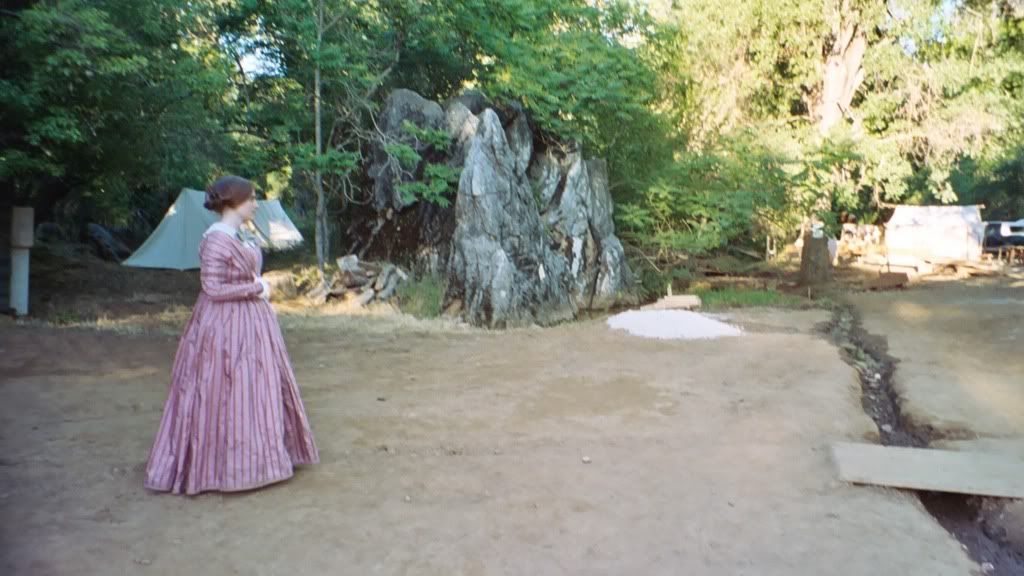
The only digitized color picture of the dress.
I have used this same pattern multiple times with reproduction cotton prints and have been pleased with them each time.  If I make another, I think I will bring up the armscye a bit, since they are fairly dropped on this pattern, and maybe play around with the point to come farther down and take up the sides.

I'm on the left and my twin sister is on the right.

Tuesday, April 5, 2011

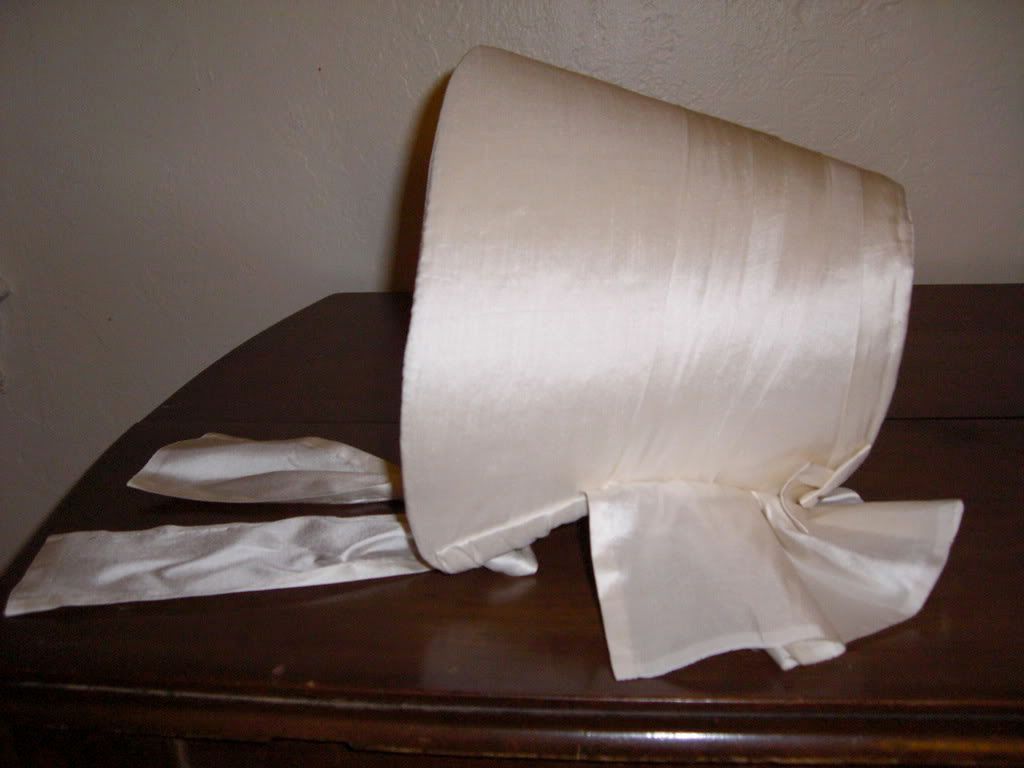
1840s Silk Bonnet

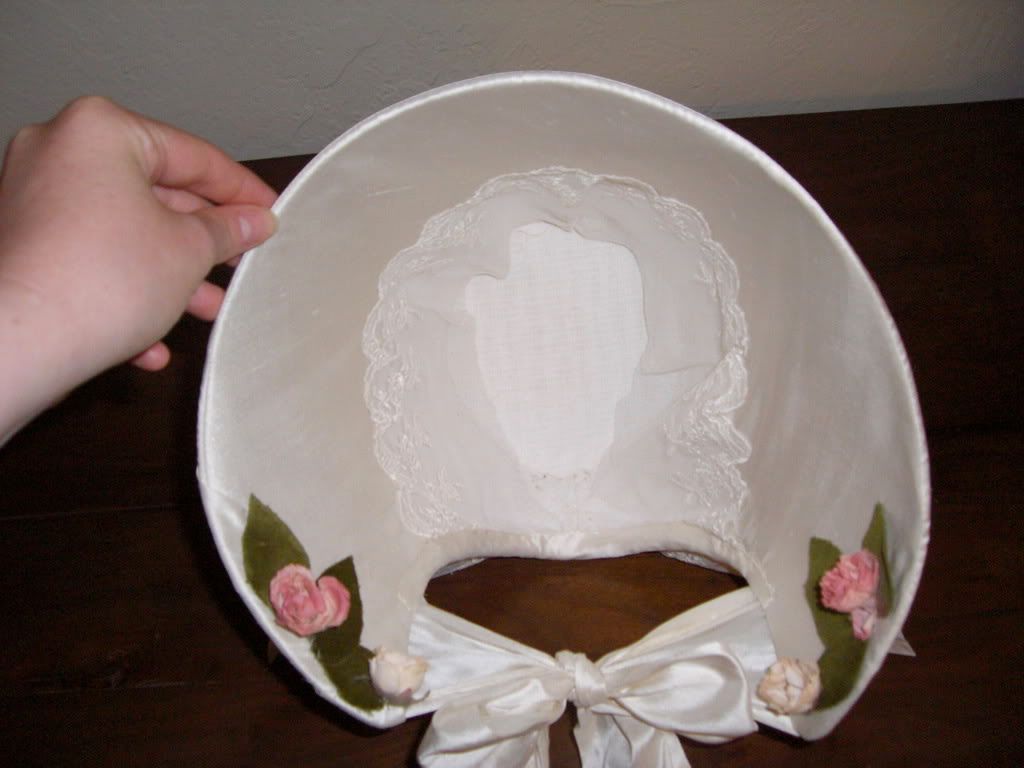
I minored in Theater Arts at Humboldt State University and one of the first class I took was millinery. Covering buckrum forms in class (I made a top hat!) gave me plenty of practice for creating my own bonnets at home. I made this particular bonnet in 2007 or 2008 from the Miller's Millinery Round Cottage Bonnet Pattern #9101 (late 1840s-early 1850s) with a cream colored silk.  The leaves are cut from cotton velveteen and the flowers are paper.
Self-fabric ties and decorative trim across the crown.
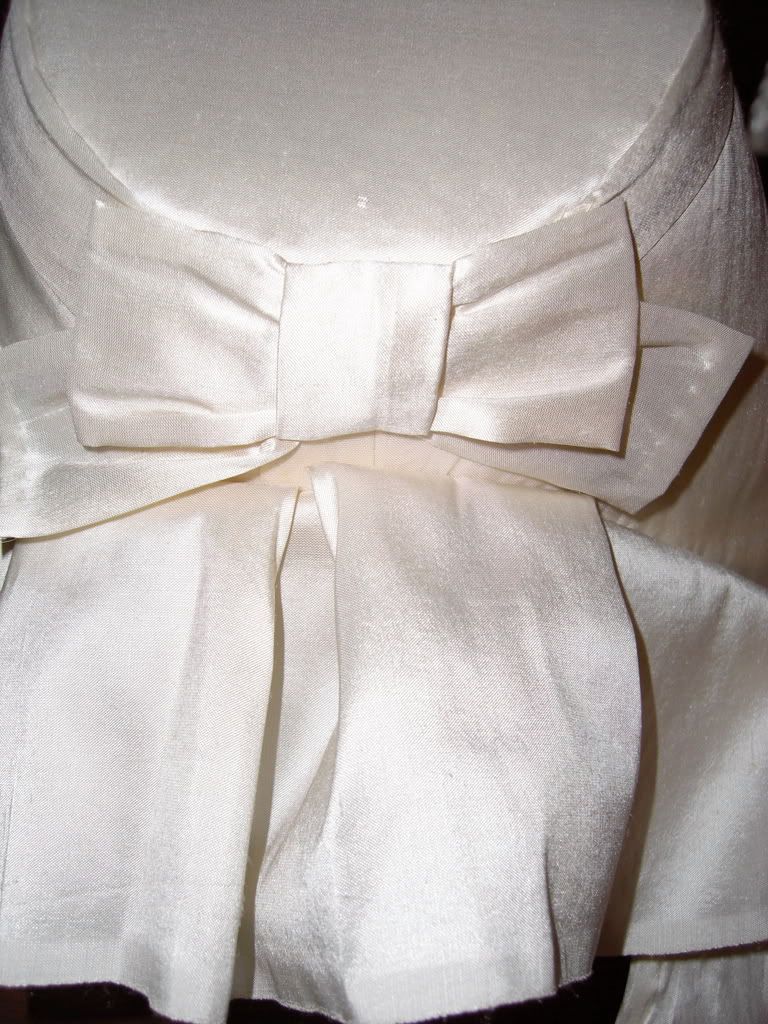
Bavolet and decorative bow coped from an original.

Interior netting grips hair to prevent slipping backwards.


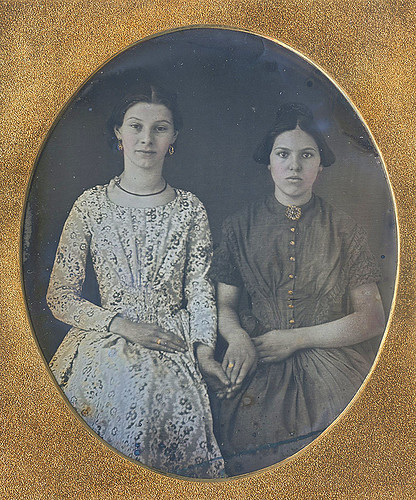
I look like a jerk in the one picture I have of me in this bonnet that I would rather not share... I want to re-trim the bonnet like the one above with some very similar flowers to the dag above that Ian bought me at Nancy's Sewing Basket in Seattle.