 |
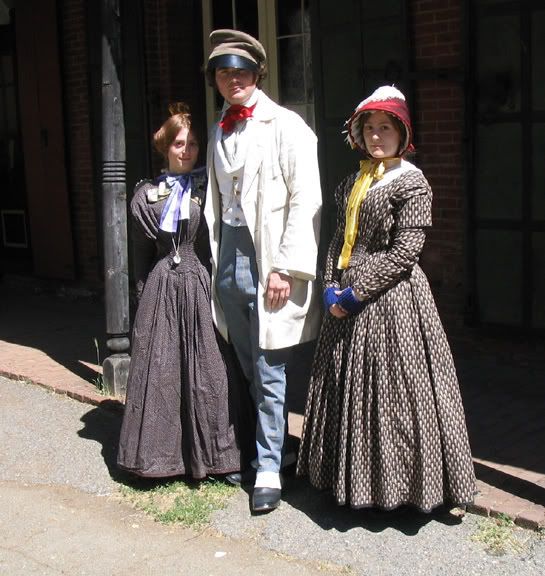
| Left to right: Me, Ian, Heather. |
Tuesday, July 26, 2011
1840s Street Style
Due to the fact that I'm moving this coming weekend, I haven't had much time to post, let alone work on any projects. In lieu of anything new, here is a group shot of myself, Ian, and my sister Heather in 2006 at Columbia State Historic Park. We are all wearing clothing made from Past Patterns, except for Heather's bonnet, which is from Miller's Millinery.

Sunday, June 26, 2011
1840s Cooking Utensils
This is what I use to cook at events:
Originals:
Iron skillets
Rockingham bowl
Wine or Champagne bottles to roll out dough (this always gets a lot of attention, but it works!)
Black glass bottles to hold spices, jam, etc. (they were great recyclers back then...)
Iron trivet
Copper Tea Kettle
Bone handled forks and knives
Pewter spoons
Milk pan/gold pan
Salt glazed jug for water
English transferware bowls, plates, and tea cups
Modern/reproductions:
Wood spoons
Knitted pot holders
Salt glazed pottery for butter/lard
Hot tin dipped plate/cups
Dog River sauce bottles
Originals:
Iron skillets
Rockingham bowl
Wine or Champagne bottles to roll out dough (this always gets a lot of attention, but it works!)
Black glass bottles to hold spices, jam, etc. (they were great recyclers back then...)
Iron trivet
Copper Tea Kettle
Bone handled forks and knives
Pewter spoons
Milk pan/gold pan
Salt glazed jug for water
English transferware bowls, plates, and tea cups
Modern/reproductions:
Wood spoons
Knitted pot holders
Salt glazed pottery for butter/lard
Hot tin dipped plate/cups
Dog River sauce bottles
 |
| Typical layout at Coloma |
 |
| Cooking dehydrated apples to put in fried pies |
Monday, June 13, 2011
1840s Pleated Bertha

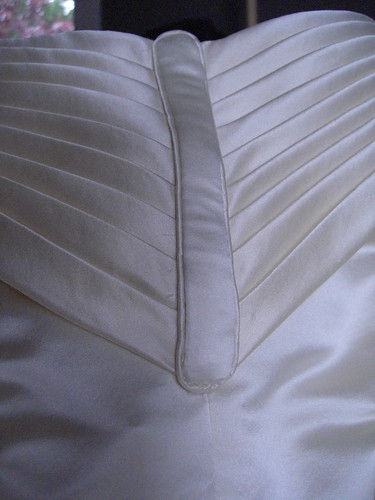 | |
| Detail of pleated bertha. |
 |
| Simplicity 5724 |
 | |
| Bertha back, note lozenges over shoulder seam. |
Thursday, June 2, 2011
Laughing Moon #114 Ladies Round Dress 1840s-1852
Late 1840s bodices are usually either darted or fan front, with variations of course.
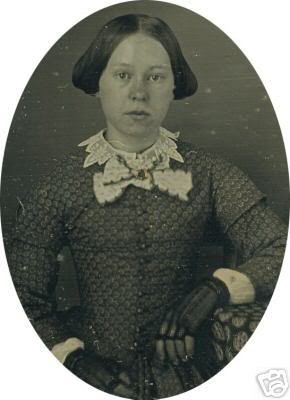 |
| Darted 1840s Dress |
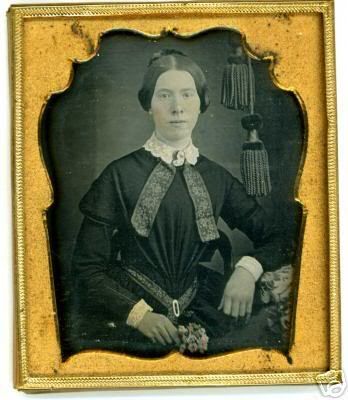 |
| Fan Front 1840s Dress |
Most of the dresses that I made for Gold Rush had been the fan front style using the Past Patterns dress, until Laughing Moon Mercantile published their Ladies Round Dress Pattern. A variety of styles can be achieved with the pattern with a darted or fan front bodice, sleeve variations, etc. I made the darted version with a tighter sleeve and sleeve caps.
I used an 1840s reproduction cotton print with vines and bubbles, (hence the dress has been dubbed “The Bubble Dress”), 100% silk satin to cover wood discs for the buttons, and 100% silk satin ribbon trim. The bodice lining is boned at the darts that extend up to the bust line and the dress has functional cuffs.
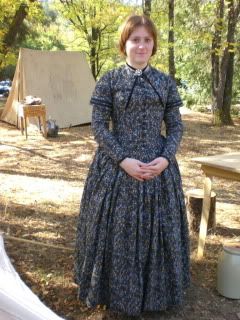 |
| 1840s Round Dress Pattern |
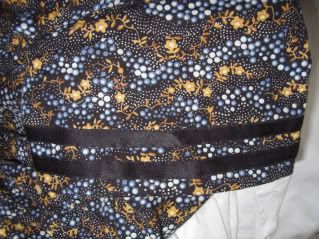 | |||
| Sleeve cap ribbon detail. |
Overall, I really like this pattern. The armscyes were a bit too small for me, but other than that it went together great. I think I will be using the bodice pattern as a base for a new 1853 dress I have in the works. .
Friday, May 20, 2011
McCall's 5129 Bonnet Pattern
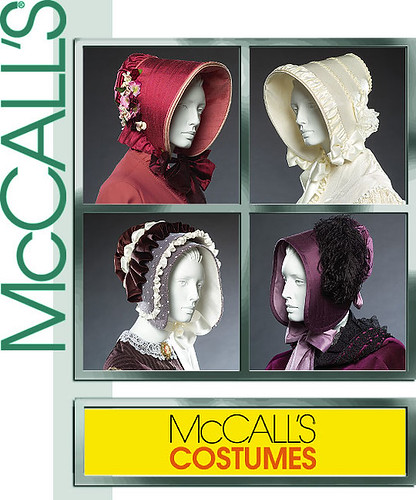
This was the first bonnet that I made by myself outside of millinery class. It's McCall's 5129, which is now out of print. I made up View A (the red bonnet), but with modifications. I completely ignored the instructions, since it says to use a glue gun!
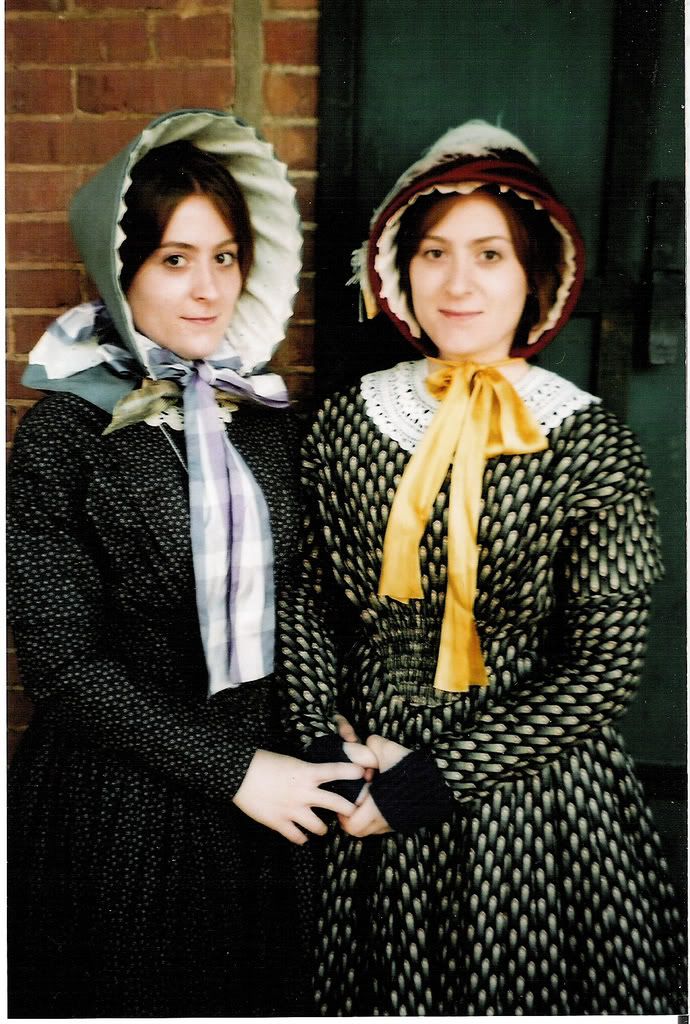 |
| Grey bonnet on left is McCalls's 5129, bonnet on right is Miller's Millinery Round Cottage Bonnet. |
I dyed some ivory taffeta to a pearl grey color for the fashion fabric and cut strips from a periwinkle, lilac, and white silk plaid that I had on hand for the ties and bavolet. The brim is lined in cotton eyelet, which really needs to be changed out. I cite the "poor college student" clause for its use! I have a thin layer of batting over the top of the buckram frame to cover the seams where the wire is attached and to give a nice, smooth appearance. Instead of a gathered crown I made mine smooth and I made my bavolet much deeper. I think for my first independent attempt, it turned out okay. I don't wear it very often, but with a few changes and tweaks, perhaps it will come out to events again.
Sunday, May 8, 2011
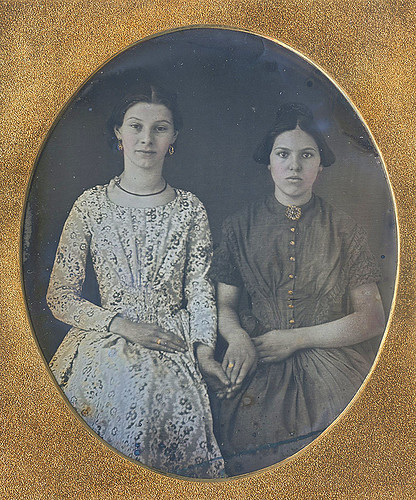
1840s Fan Front
I just completed this project to attend a Gold Rush living history event this weekend where I gave a presentation on material culture and foodways of the California miner in the 1840s and 1850s. Here's the inspiration images:
 | |||
| Wool Dress and Pelerine, August Auctions. |
 | ||||
| Left side dress, source: finedags.com |
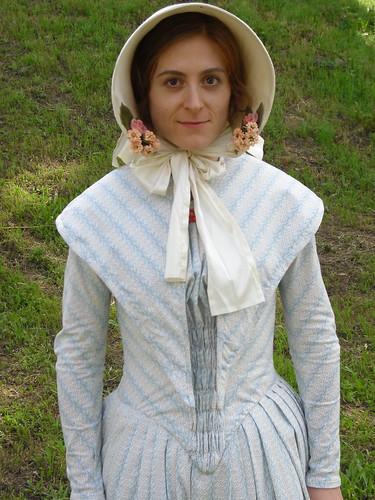 |
| Pelerine front |
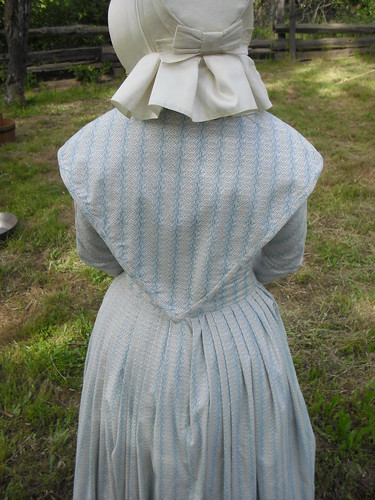 |
| Pelerine back |
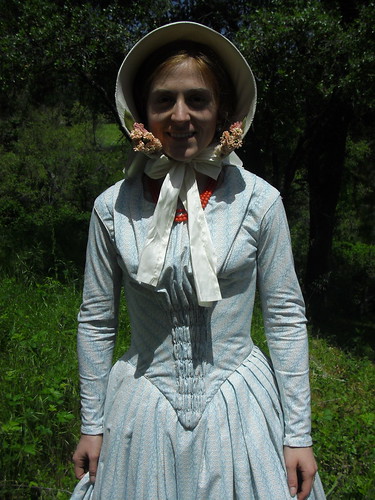 |
| Without the pelerine |
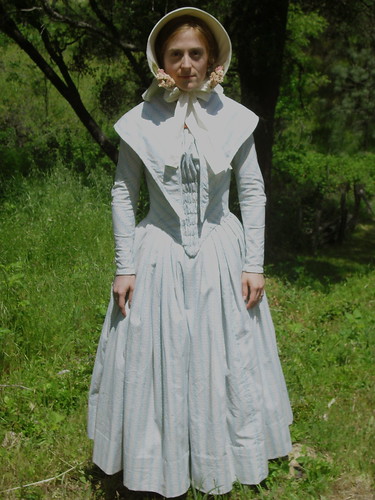 | ||
| Full view |
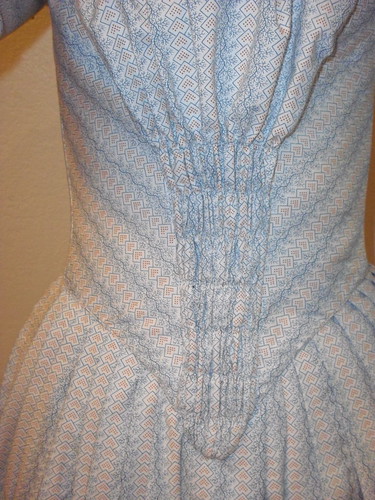 |
| Detail view of fabric and fan front gathering |
Tuesday, April 19, 2011
Handsewn Gold Rush Tent
I admit it. I bought a HUGE wall tent when I started going to Civil War events. It was even nicknamed "The Miller Mansion." Not only was it a pain to set up with a system of bolted 2 x 4's, side wall posts, ropes, and spikes, it took up a lot of space in storage and in the car to events. This would not do.
Fast forward a few years and Ian and I had the idea to make our own tent for Gold Rush events, since the wall tent was just too big and not appropriate for the time period we were using it for. Friends of ours had sewn their own, so they were also a source of inspiration for the project. We looked at original images and sketches and designed our own.
 |
| "View of Agua Fria Valley" Source: Bancroft Library |
We bought canvas from the local fabric store and cut the fabric into the width that was commonly used for canvas manufacturing in the 1840s. We used twine to sew the seams with a simple running stitch. We ended up needing more canvas than we had calculated for and ended up buying some unbleached heavy cotton to complete the final strip in the tent peak. This actually worked perfectly since it is a thinner fabric, it almost acts as a skylight to illuminate the interior of the tent! A friend of ours cut a ridge pole and two supports from some saplings (instead of the horrible cut lumber I had for the wall tent), which really completes the whole tent.
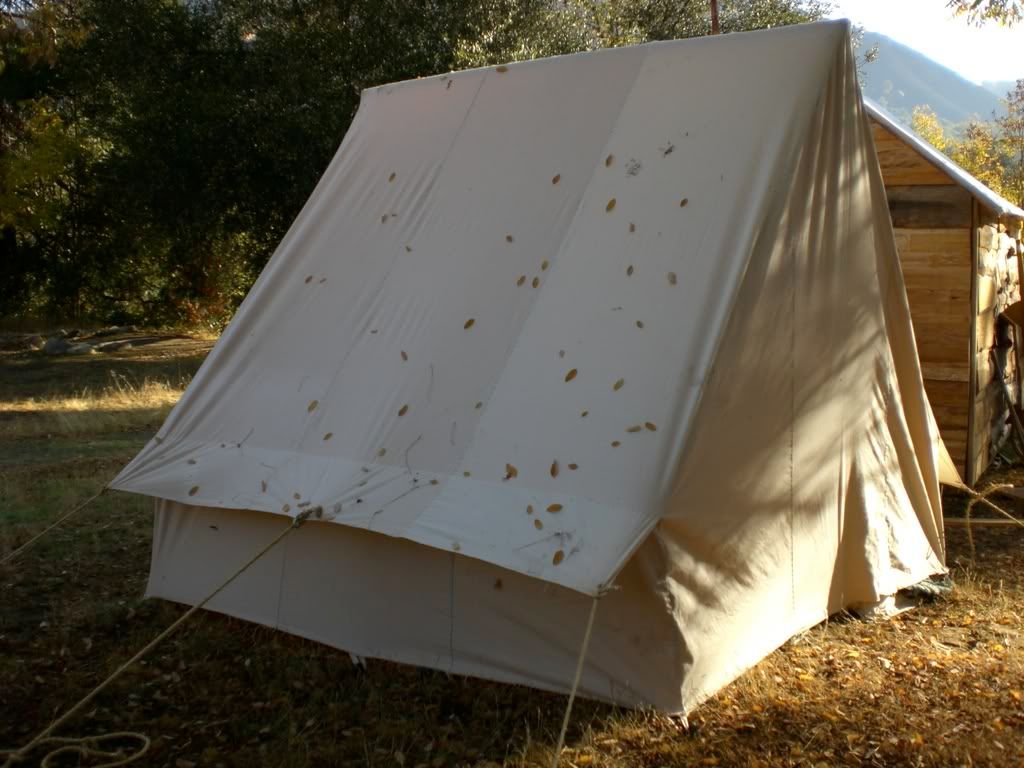 |
| Back and side view |
 |
| Front view, other handsewn tents in background. |
Overall, it was a fun project and something that we will get years of use out of.
Subscribe to:
Posts (Atom)